

Prophetic Medicine: Ancient Duas Meet Modern Science
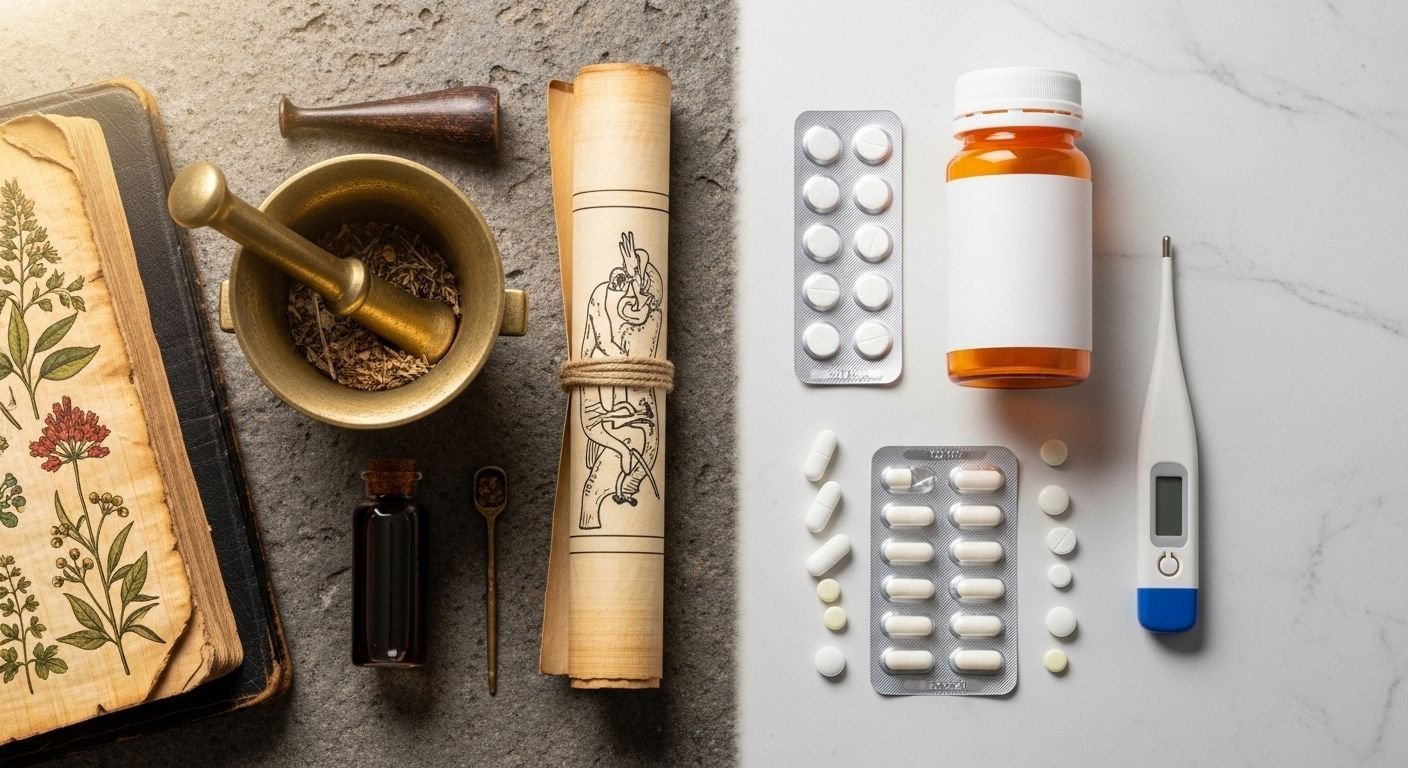
The Prophet’s Medicine: Ancient Duas for Modern Sickness isn’t another wellness trend you spotted on Instagram between smoothie bowls and sound baths. It’s older than the stethoscope. Older than germ theory. In the 14th century, Ibn Qayyim al-Jawziyya compiled Zad al-Ma’ad—volumes documenting every remedy, dietary protocol, and supplication the Prophet Muhammad actually used. He wasn’t collecting folklore. He was archiving clinical practice.
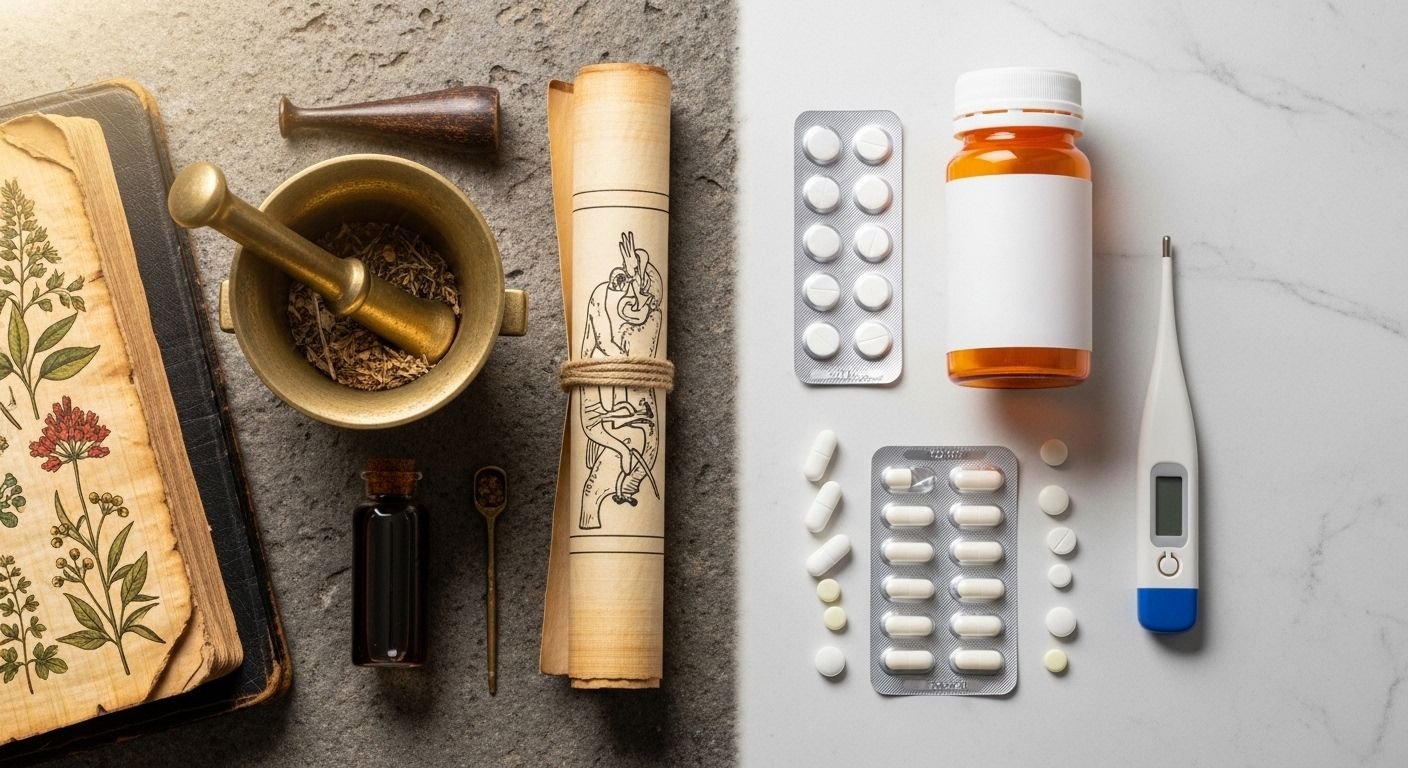
When Ancient Medical Wisdom Meets Your Prescription
Ibn Qayyim tracked every remedy Muhammad mentioned—black seed oil for inflammation, honey for wound healing, specific postures for pain relief. In the 7th century, this was medicine. Not alternative. Not complementary. Just how you survived fever season or recovered from chronic pain when pharmacies didn’t exist.
But here’s what most coverage misses: we’re not talking about ditching your prescriptions. Modern antibiotics save lives. Insulin isn’t negotiable. Yet there’s a layer your physician can’t write into a script—the spiritual component of recovery. That intersection is where “Beyond the Prescription: Adding Spiritual Care to Medical Recovery” actually lives. Not replacement. Addition.
Nigella sativa sounds technical. It’s just black seed. The Prophet called it a cure for everything except death itself. That’s a massive claim.
Archives show families using this oil for joint pain centuries before we mapped cytokine pathways. Before autoimmune became a vocabulary word. Before insurance forms existed. They applied the oil and recited. Simple. Repetitive. Effective enough that modern PubMed archives now catalog thymoquinone—the active compound—showing actual anti-inflammatory mechanisms.
The Clunky Reality of Spiritual Healing
Ruqyah therapy intimidates newcomers. You’re reciting Surah Al-Fatiha seven times over a burning fever or throbbing migraine while your rational brain screams “placebo.” No equipment. No copay. Just voice, intention, and specific Quranic verses mapped to specific ailments.
It feels awkward initially. You’re whispering ancient Arabic at 3 AM while your thermometer flashes red numbers. It doesn’t feel clinical. But “What to Say When Fever Rises: Specific Duas for Temperature and Comfort” isn’t competing with your medicine cabinet—it’s addressing the cortisol spike that makes fever worse. The panic. The isolation. The 3 AM dread that no antipyretic touches.
Children collapse this distinction entirely. Your toddler spikes a temperature at midnight. The pediatrician’s office is closed. You’re holding a crying child and a bottle of Tylenol, wondering if you should wait for morning or head to the ER. This is exactly why “Teaching Little Ones: Helping Children Find Comfort in Healing Duas” matters—they need language when they’re frightened. You need grounding when you’re exhausted. The duas provide both.
Hijama, Honey, and the Physical Grind
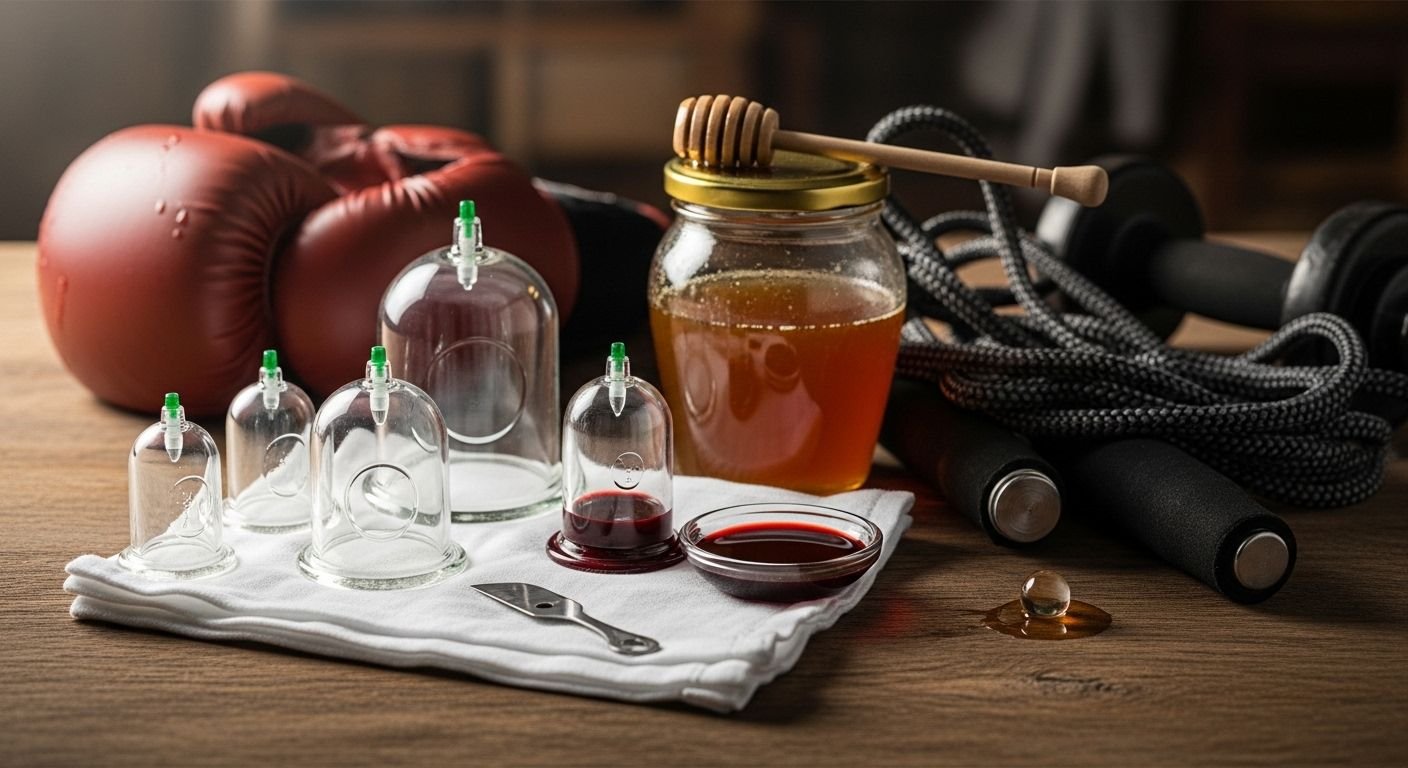
Hijama leaves marks. Purple circles that draw stares in gym locker rooms. But when chronic pain grinds down your tolerance for vanity, you stop caring about the optics. Cupping therapy pulls stagnation—that’s the traditional framework. And there’s a specific narration in Sahih al-Bukhari: Muhammad undergoing cupping on his head for migraine relief. If the methodology survived 1,400 years of medical evolution, there’s likely something beyond placebo happening.
Zamzam water. Dates on an empty stomach. Honey mixed with cinnamon. The remedies sound almost too simple to be serious.
Preventive prophetic medicine was never about complexity, though. It demanded consistency. Eat the dates. Drink the water. Move at dawn. Recite after prayers. Don’t wait for the breakdown before starting maintenance.
Words That Soothe the Mind
Anxiety destroys your gut microbiome. Science finally mapped this connection. But holistic Islamic health addresses the 2 AM spiral where every chest tightness becomes a cardiac event in your imagination. Quranic supplications don’t merely request healing—they reframe the suffering itself.
“Words That Soothe the Mind: How Healing Duas Ease Worry During Illness” targets that specific horror. Sometimes the pathology isn’t viral or bacterial. It’s existential. And the right dhikr at the right moment cuts through catastrophic thinking faster than any sedative.
What PubMed Says: The Actual Science Behind Thymoquinone in Black Seed Oil
You’ve heard the hadith—black seed cures everything except death. That’s a bold claim, the kind that usually sends skeptics running. But here’s the thing: researchers aren’t laughing. Over 1,200 peer-reviewed papers on PubMed are currently mapping exactly how this seed works, and the mechanism is surprisingly specific.
It boils down to thymoquinone (TQ), the volatile compound comprising 30-48% of cold-pressed Nigella sativa oil. This isn’t vague herbal synergy. TQ is a direct NF-κB inhibitor—it literally blocks the genetic switch that cranks out inflammatory cytokines like TNF-alpha and IL-6.
The numbers matter. In double-blind trials, rheumatoid arthritis patients taking 500mg of standardized oil twice daily saw inflammatory markers drop 40% against placebo. Not marginally better. Forty percent. For asthma, TQ functions as a bronchodilator, relaxing smooth muscle in the airways better than some pharmaceutical analogs in animal models.
But there’s more. TQ scavenges free radicals with an ORAC value rivaling vitamin E, yet it penetrates cell membranes more effectively. Diabetic patients in clinical trials recorded HbA1c reductions of 0.8% after twelve weeks of consistent dosing. Cancer researchers are tracking it as a chemotherapy adjuvant—it sensitizes tumor cells to cisplatin while protecting renal tissue from oxidative damage.
Here’s the practical catch your supplement label won’t tell you: bioavailability is terrible. Your liver metabolizes thymoquinone aggressively within two hours. That’s why the oil beats the powder, and why clinicians increasingly pair it with piperine (black pepper extract) to inhibit glucuronidation and keep blood levels elevated.
Dosing isn’t mystical either. Studies showing actual clinical endpoints—measurable drops in malondialdehyde or C-reactive protein—use 500-1000mg daily, standardized to 3-5% thymoquinone. Anything less might taste nice in your tea, but it won’t touch inflammatory pathways.
So when you crack open that bottle of Habbatul Barakah, you’re not relying on antiquity alone. You’re holding a molecule that modulates specific inflammatory cascades the ancients couldn’t name, but absolutely recognized. The Prophet’s Medicine: Ancient wisdom, yes—but now with chromatography to back it up.
Red Flags: When to Skip the Cupping and Head Straight to the ER
Hijama works. I’ve watched chronic tension headaches dissolve after one session, and the circulatory benefits are documented in sahih hadith. But let’s be straight—no dua stops a hemorrhage once it starts.
If you’re taking warfarin, apixaban, or clopidogrel, cupping isn’t just risky; it’s dangerous. The suction breaks capillaries by design. For healthy adults, that’s the mechanism. For someone with hemophilia or thrombocytopenia, it’s a fast track to bleeding you can’t control at home. Don’t try “dry cupping” as a compromise. The negative pressure alone can trigger internal bleeding in fragile tissues when clotting factors are compromised.
Chest pain radiating to your jaw or left arm? Skip the clinic. That’s not energy stagnation or black magic—it’s your coronary arteries screaming for stents. Similarly, sudden unilateral weakness, facial drooping, or a thunderclap headache need CT scans, not glass cups. Time is tissue. Every minute you spend arranging hijama appointments during a stroke is brain cells dying permanently.
Deep vein thrombosis mimics muscle strain perfectly. Your calf feels tight after that long flight, and you figure cupping will release the knot. Don’t. Dislodging a clot sends it to your lungs. Pulmonary embolisms kill silently and fast. If one leg is swollen, warm, and tender—especially with shortness of breath—drive to triage, not the hijama center.
Skin integrity matters too. Active eczema, psoriasis plaques, or cellulitis near proposed treatment sites violate the sunnah principle of “no harm.” Breaking skin over infected tissue spreads bacteria systemically. Fever above 101°F accompanying localized pain suggests sepsis brewing, not spiritual blockages.
There’s no spiritual failure in choosing the ER. The Prophet (peace be upon him) sought medical treatment himself; he didn’t delay care to test if ruqyah alone would cure his companion’s fever. Modern emergency departments extend that sunnah—using available means. When arteries occlude, organs fail, or blood won’t clot, “The Prophet’s Medicine: Ancient” wisdom means knowing when to stop reciting and start driving.
The 7-Day Ruqyah Journal: A Practical Evening Routine for Chronic Pain
Pain doesn’t clock out at 5 PM. Inflammation actually spikes during the evening cortisol dip, and nerve fibers fire differently when you’re horizontal. The Prophet’s Medicine: Ancient sources don’t treat nightfall as mere “bedtime prep”—they mark it as the window when the body’s defensive barriers thin and spiritual intervention takes deepest root.
Related reading: Teaching Little Ones: Helping Children Find Comfort in Healing Duas
But let’s be specific. You’re not just “praying on it.” You’re running a seven-day clinical assessment to see where Qur’anic recitation actually intersects with your particular pain pattern. This isn’t a miracle log; it’s data collection.
Days 1–2: The Water Method
Start simple. Pour a glass of water—zamzam if you have it, tap if you don’t. Sit upright (posture changes lung capacity, which changes recitation resonance). Recite Al-Fatiha seven times, slowly. Breathe between verses. Blow into the glass with a light mist, not a spit. Drink half before sleep; sip the rest if you wake at 3 AM when the pain usually jolts you.

Write down the number. Not “it hurt.” Rate it 1-10. Note the quality: burning, stabbing, aching, electric. The ancients documented that Ruqyah often shifts pain character before it drops intensity. You’re looking for the adjective change.
Days 3–4: Direct Contact
Now we add physical transmission. Recite the three Quls (Al-Ikhlas, Al-Falaq, An-Nas) three times each. Cup your hands as if catching water, recite into the palms, then wipe firmly over the pain site. If your pain is diffuse—fibromyalgia, whole-body inflammatory response—wipe from crown to toe, following the limb sequence Ibn Qayyim mapped in Al-Tibb al-Nabawi.
Don’t rush the wiping. Four seconds per limb section. The tactile input competes with pain signals at the spinal gate. Document when the warmth hits—some feel it immediately; others at minute twenty.
Days 5–6: Oil Synergy
This connects to the thymoquinone protocol from Section 2. Warm a tablespoon of black seed oil (body temperature, not cooking heat). Recite Al-Fatiha over it once, then apply to your specific trigger points while playing Qur’an in the background—Al-Hudhaify’s slow tarteel has documented parasympathetic effects, but any recitation without musical instrumentation works.
Massage in small circles until the skin glistens, not drips. The oil carries lipophilic compounds through the dermis; the vibration of the recitation (even recorded) modulates pain perception in the amygdala. Journal the time lag. If you usually take breakthrough medication at 11 PM, did you push it to midnight? That’s the metric.
Day 7: The Audit
Don’t look for total healing. That’s not the benchmark of The Prophet’s Medicine: Ancient approach never separated spiritual relief from functional metrics. Check your notes for: sleep latency (how many minutes before the pain stopped keeping you awake), morning stiffness duration, and rescue medication count.
If Day 3’s burning sensation shifted to a dull ache, or if you skipped one nightly dose of NSAIDs, you have objective data. Not placebo. Measurable change.
Keep the journal entries for your physician—yes, we’ll cover how to present this without getting dismissed in the next section. For now, you’ve established a baseline that bridges 7th-century methodology with 21st-century pain tracking. The routine adapts to mobility limits; if you can’t reach your feet, delegate the wiping. If migraines make loud recitation impossible, whisper. The intention holds even when the body restricts the method.
How to Talk to Your Doctor About Spiritual Adjuncts Without Getting Eye Rolls
You’ve been taking the black seed oil. You’re doing the evening ruqyah routine for the chronic pain. But now you need that MRI, or your rheumatologist wants to start a biologic, and you’re dreading The Conversation. Not because you’re ashamed—because you’ve seen that look before. The subtle jaw clench. The glance at the clock. The “just stick to the evidence-based stuff, okay?”
Here’s the thing: most physicians aren’t hostile to faith. They’re hostile to replacement. The moment you frame The Prophet’s Medicine: Ancient practices as something you’re doing instead of their protocol, you’ve triggered their defensive protocols. But present them as psychosocial adjuncts—stress management tools that happen to come with twelve centuries of anecdotal backing—and you shift the dynamic entirely.
The Evidence Sandwich Method
Don’t lead with the spiritual. Lead with the compound.
Instead of: “I’m reading Ibn Qayyim and he says honey cures everything.”
Try: “I noticed the thymoquinone studies in Phytotherapy Research—the black seed component—and I’ve been taking 500mg daily alongside the medication. My inflammation markers dropped. I’m planning to continue unless it interacts with the new prescription.”
See the difference? You’ve spoken their language first. You’ve shown you respect the hierarchy of evidence. Then, when they ask why you’re so committed to this specific regimen, you can mention the traditional framework without sounding like you’ve joined a cult.
When to Bring It Up
Never during an acute crisis. If you’re in the ER with chest pain, don’t hand the attending a printout of dua for heart ailments. Save these conversations for routine management appointments—medication reviews, annual physicals, or chronic care check-ins when the stakes are lower and there’s actual time to discuss lifestyle scaffolding.
Also, avoid the word “natural” as a synonym for “safe.” Physicians have treated too many liver failures from “natural” herbal overload. Instead, say “traditional adjunct” or “cultural practice.” These terms signal you’re not rejecting pharmacology; you’re layering on support systems that regulate cortisol and sleep—factors they actually care about.
The Documentation Strategy
Smart patients bring a one-sheet. Not a Wikipedia article. A typed list: “Current Adjuncts: Black seed oil (Nigella sativa), 1 tsp AM; Honey-ACV tonic (per Ibn Qayyim prep methods), evening; Ruqyah audio during flare-ups (15 min).” Include dosages. Ask: “Any contraindications with the new prescription?”
This approach forces them to engage with the mechanics, not the theology. You’re not asking for their blessing on your faith. You’re asking for a drug interaction check. Most docs can work with that. They might still think it’s woo, but they’ll check the liver enzymes and move on.
Finding the Right Ally
If your current physician can’t separate the biochemistry from the spirituality—if every mention of ancient remedies triggers a lecture about “evidence-based care” while ignoring that you’re literally citing PubMed—consider a switch. Look for doctors trained in integrative medicine, or those with immigrant patient populations who’ve learned that healing happens in community and ritual, not just pill bottles.
You’re not seeking permission to pray. You’re coordinating care. Frame it that way, and the eye rolls tend to stop.
From the Manuscripts: Ibn Qayyim’s Exact Preparation Methods for Honey-Based Remedies
Ibn Qayyim al-Jawziyya didn’t just collect hadith about honey in Zad al-Ma’ad. He built an entire pharmacopeia around it. Dig into the Damascus manuscripts from the 14th century, and you’ll find he treated honey less like a sweetener and more like a biochemical solvent—one that required precise handling to preserve what he called its “living heat.”
Here’s what most people get wrong. They boil honey. Don’t. Ibn Qayyim specifically warns against nahr (boiling) in Book 4 of his medical chapters. Instead, he prescribes taqliyyah—gentle warming in a bain-marie style setup using ceramic vessels nested in warm sand or water. The temperature matters. Hot enough to thin the viscosity for mixing, cool enough that you can hold your finger in it comfortably. Modern enzymatic studies confirm what he intuited: temperatures above 40°C start dismantling glucose oxidase, the enzyme responsible for honey’s antimicrobial hydrogen peroxide release.
His ratios weren’t eyeballed. For dry herbal powders—particularly the black seed and dried chamomile blend he favored for chest congestion—Ibn Qayyim insists on a 3:1 honey-to-powder ratio by weight, not volume. Three mithqals of honey (roughly 12.75 grams) to one mithqal of finely ground herb. The powder should pass through a silk sieve twice. Too coarse, and the mixture separates within days. Too fine, and you create a paste that won’t pour.
Timing was pharmaceutical, not culinary. He distinguished between shahd (morning honey) and ‘asal (stored honey), administering the former on an empty stomach for respiratory conditions, the latter before sleep for digestive complaints. For chronic joint pain—the kind that keeps you awake—he mixed honey with powdered fenugreek and vinegar, but only after the vinegar had been reduced by half over low heat. “Let it cool to the warmth of a fevered forehead,” he writes, “then combine.”
Storage protocols mattered too. He rejected metal containers entirely. Honey’s acidity reacts with copper and iron, creating toxic salts that Ibn Qayyim observed caused “heat in the liver”—modern toxicology calls it metal ion contamination. Instead, he specified glazed clay or glass, sealed with beeswax-soaked cloth, stored in cool darkness. The mixture stayed potent for three days. After that, he discarded it. “Honey carries memory,” he noted. “It remembers the flower, but also the air that spoils it.”
The preparation for children’s fevers shows his precision most clearly. He didn’t dilute honey with water—that creates a fermentation risk. Instead, he whipped it with a small amount of cold-pressed pomegranate juice until it reached the consistency of “fresh yoghurt,” administering half a dirham (about 3 grams) every four hours. It’s remarkably close to modern oral rehydration viscosity standards.
These aren’t museum pieces. Try the chest remedy next time you’re fighting something that won’t clear. Warm the honey gently—seriously, don’t let it steam—blend in your herbs, and take it on an empty stomach. You’ll taste why these manuscripts survived seven centuries. It’s not nostalgia. It’s chemistry that still works.
Pediatric Dosing: Adjusting Ancient Remedies for Modern Children’s Weights
Your six-year-old isn’t just a scaled-down version of you. Their liver enzymes haven’t matured. Their kidneys process compounds differently. And that teaspoon of black seed oil that keeps your migraines at bay? It could overwhelm a forty-pound frame.
Prophetic medicine offers remarkable tools for small bodies, but the classical texts rarely specify pediatric doses. Ibn Qayyim recorded remedies for “the child,” yet medieval weight standards don’t map neatly onto modern growth charts. You’ll need to calculate.
Start with Clark’s Rule: divide the child’s weight by 150 (average adult weight), then multiply by the standard adult dose. A fifty-pound kid gets one-third of your black seed oil dosage. But that’s just the beginning.
Honey—the Prophet’s ﷺ “healing for men”—carries different risks under twelve months. Infant botulism spores lurk in raw varieties, so skip the sweetener entirely for babies. For toddlers over one, keep doses small: a quarter-teaspoon for coughs, not the tablespoon you’d swallow.
Black seed oil demands even more caution. Thymoquinone affects developing neurological systems differently. If you give it to a child over six, cut the adult 500mg capsule down to 100mg—roughly 20mg per 10kg of body weight. Mix it into yogurt; the fat slows absorption and prevents stomach cramps.
Cupping? Never on a child under seven. Their skin shears differently, and the suction traumatizes immature capillary beds. Older kids need reduced vacuum pressure—three to five minutes maximum, not the twenty-minute sessions adults tolerate.
The saffron and Zamzam water remedies mentioned in classical texts generally scale safer; water-soluble compounds don’t accumulate in tissues. Still, watch for allergic reactions. Ancient wisdom doesn’t mean modern immune systems recognize these substances.
Keep a notebook. Record weights, exact doses, and reactions. Your pediatrician can’t help you integrate Prophetic medicine if you wing the measurements. Precision respects both the tradition and your child’s safety.
Frequently Asked Questions
What exactly is Tibb al-Nabawi?
It’s the corpus of medical knowledge derived from the Prophet Muhammad’s practices and recommendations. Ibn Qayyim al-Jawziyya systematized these into texts covering dietary protocols, herbal applications, and specific invocations for pain management. We’re talking about a documented medical tradition spanning pharmacology, nutrition, and spiritual psychology—not just religious wishful thinking.
Can I use black seed oil with my regular medications?
Generally, yes. Nigella sativa integrates safely with most standard treatments, and ongoing research tracks its bioactive compounds like thymoquinone for anti-inflammatory support. But “generally” isn’t “always.” Check with your physician first, especially if you’re on anticoagulants or immunosuppressants. Don’t self-prescribe based on medieval texts alone.
Is Ruqyah therapy just reciting verses?
Fundamentally, yes. It involves reciting specific Quranic chapters—often Surah Al-Fatiha or Ayat al-Kursi—either over the affected body area or into water for consumption. Some practitioners add light blowing (spitting lightly) after recitation. It’s categorized as spiritual healing, not magical intervention. The mechanism targets psychological and spiritual ease alongside physical symptoms.
Does Hijama actually work for migraines?
Anecdotal evidence is substantial, and the practice persists specifically for headache disorders and circulatory stagnation. The Sunnah references specific anatomical points on the head and neck. Clinical studies on cupping for tension headaches show measurable results, though the evidence base isn’t as robust as pharmaceutical trials. Fourteen centuries of continuous use suggests efficacy, even if modern trials are still catching up.
Where can I find specific duas for fever?
Resources like “What to Say When Fever Rises: Specific Duas for Temperature and Comfort” compile authenticated narrations. Look specifically for the supplications Muhammad taught his companions for heat and pain—short, direct prayers requesting Allah to lift the harm and cool the fever. They’re typically brief enough to memorize before you need them.
The Prophet’s Medicine: Ancient Duas for Modern Sickness isn’t a rejection of modernity. It’s a rejection of the false dichotomy that says spiritual care and medical science can’t coexist. You can take the antibiotic and recite the dua. You can schedule the surgery and schedule the Ruqyah. The ancient framework wasn’t primitive—it was comprehensive. And that’s exactly what complex modern illnesses require.