

The Leadership Crisis That Divided Muslims After Muhammad
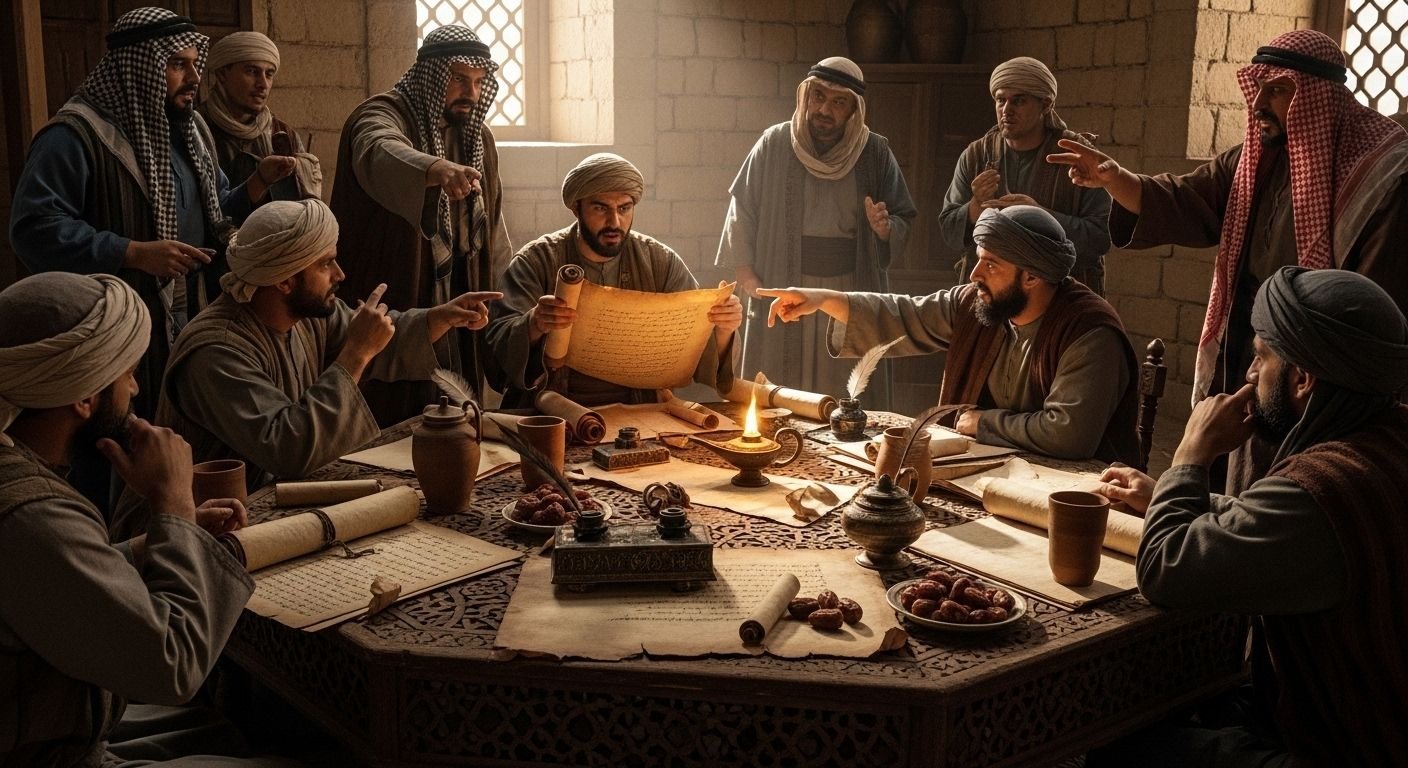
When the Prophet breathed his last in that small room in Medina with his head resting on Aisha’s lap and the sun barely setting over the date palms nobody had a playbook for what came next because succession wasn’t exactly spelled out in a constitution and the community was suddenly staring into a void that would define the next fourteen centuries of Islamic civilization.
Chaos reigned.
The early caliphate was born in sweat and panic. You had the Muhajirun—the folks who’d migrated from Mecca clutching their few possessions—and the Ansar—the Medinan locals who’d taken them in. Two groups with different ideas about who should steer the ship. And right there in the middle sat the leadership vacuum that everyone wanted to fill but nobody wanted to admit was a power grab.

The Saqifah Meeting: A Messy Afternoon
While Ali ibn Abi Talib and the family were busy washing the Prophet’s body and preparing the burial—because someone had to handle the grim work of death—the Ansar had other plans. They gathered under a shady spot at Saqifah Banu Sa’idah to hash out the future. Their argument was clunky but straightforward: we sheltered these migrants, we fought alongside them, we know the terrain, so why shouldn’t one of us lead?
But the Muhajirun weren’t having it.
Abu Bakr and Umar ibn al-Khattab crashed that meeting with a gut check argument about lineage and pedigree. The Ansar suggested a dual leadership—one from them, one from the migrants. Abu Bakr shut that down fast. He offered his hand to two candidates from the Ansar then pulled the classic political move of nominating Umar and Abu Ubaidah instead. It was a grind of persuasion and pressure that ended with Abu Bakr becoming the first of the Rashidun caliphs while Ali was still digging the grave.
Rightful Successor: Two Stories
Here’s where the Islamic schism really starts cooking. If you look at how Caliphs and Imams: How Leadership Models Shape Islamic Beliefs, you’ll see the fault line immediately. One camp saw the caliphate succession as a political necessity requiring a steady hand and tribal consensus. The other saw it as a divine transmission through bloodlines.
Ali’s supporters pointed to Ghadir Khumm—that dusty stop near the pool where the Prophet allegedly took Ali’s hand and said something about authority passing to him. The Ahl al-Bayt faction believed religious authority stayed within the family. Not just a preference. A mandate from heaven.
The partisan conflict hardened fast. You had community split written all over Medina’s walls within months. Some folks pledged to Abu Bakr immediately. Others held out. Fatimah was reportedly furious. The theological divergence didn’t happen overnight but the seeds were planted in that first week of political division.
The Rashidun Years and the Grind of Power
Abu Bakr ruled for two years. Then Umar took over and expanded the empire until an assassin got him. Uthman ibn Affan followed—rich, soft-spoken, controversial. His murder opened the First Fitna. That’s when Ali finally got his shot at the caliphate but the damage was done. The unity was shattered.
When you’re looking at Ashura and Karbala, you’re really seeing where this early fracture finally shattered. Husayn’s death wasn’t just a tragedy—it crystallized every argument about legitimate authority that began at Saqifah. You’ll never truly grasp why this day matters so differently until you explore why Ashura and Karbala hold such different meanings for different Muslims. It’s impossible to appreciate this fully without understanding the seven crucial differences between Sunni and Shia Islam. But once you see the theological split clearly, the real challenge becomes figuring out how these communities actually coexist. That’s exactly why Living Together: Managing Sunni-Shia Relations in Mixed Communities is such vital reading—it moves from history to the practical art of shared spaces.
The religious authority question never got resolved. Sunni Islam developed around the consensus of the community and the righteousness of the first four regardless of blood. Shia Islam dug into the hereditary principle. Both claimed to follow the same Prophet. Both read the same book. Yet the leadership crisis had created two distinct operating systems.

Regional Politics and the Modern Mess
Fast forward to today and you’re still seeing the fallout. When you study Regional Politics: How the Divide Shapes Modern Middle Eastern Affairs, you’re tracing lines back to that afternoon under the palm trees. The theological divergence became legal divergence. Then cultural divergence. Then political enmity.
Understanding Fiqh: How Islamic Law Differs Between the Traditions shows you the practical result. Two groups praying differently, judging crimes differently, interpreting inheritance differently. All because nobody could agree on who should have taken charge when the Prophet died.
Daily Worship: Comparing Prayer Methods and Pilgrimage Customs reveals the same split in the small details. How you fold your hands. Where you place your feet. Which hadith you trust. It all tracks back to who you believe had the right to define the practice.
The early caliphate wasn’t some golden age of harmony. It was a street fight with prayers. The Ansar and Muhajirun made their choices. The Ahl al-Bayt nursed their grievances. And fourteen centuries later, we’re still living in the world that meeting created.
Frequently Asked Questions
What exactly happened at Saqifah Banu Sa’idah?
The Ansar gathered to select a leader from among themselves while the Prophet was being buried. Abu Bakr and Umar interrupted, argued that leadership must stay with the Quraysh (Muhajirun), and secured allegiance for Abu Bakr as the first caliph while Ali was absent.
Why do Shia Muslims reject Abu Bakr’s caliphate?
They believe Ali was designated as successor at Ghadir Khumm and that the Prophet’s family held exclusive religious authority. They view the Saqifah meeting as an illegitimate power grab that usurped Ali’s divine right.
How long did the Rashidun Caliphate last?
Approximately thirty years (632–661 CE), covering the reigns of Abu Bakr, Umar, Uthman, and Ali. This period is considered the “rightly guided” era by Sunni Muslims despite the civil wars and assassinations.
What was the First Fitna?
The first Islamic civil war (656–661 CE) that erupted after Uthman’s murder. It pitted Ali’s supporters against Aisha, Talha, and Zubayr at the Battle of the Camel, then against Muawiya at Siffin, permanently fracturing the community.
Did the Prophet name a successor before dying?
Sunni sources suggest he left no explicit instruction, allowing the community to choose. Shia sources cite Ghadir Khumm as a clear designation of Ali. The ambiguity created the original leadership vacuum that fueled the split.
Lorem Ipsum