

Islamic Golden Age and Civilization
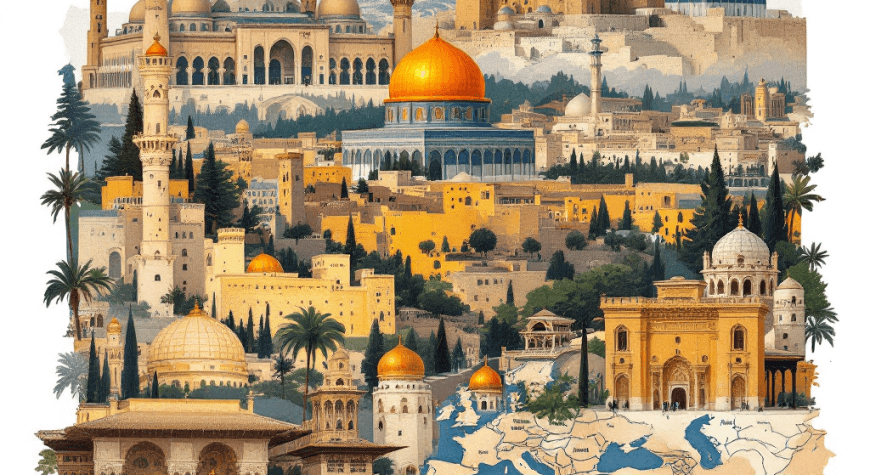
Islamic History and Civilization
The history and civilization of Islam are rich and multifaceted, stretching over a millennium and influencing various aspects of global development, from science and philosophy to art and politics. Beginning in the 7th century CE, Islamic civilization emerged in the Arabian Peninsula, centered around the life and teachings of the Prophet Muhammad. Over time, Islam spread far beyond its place of origin, reaching regions as diverse as Spain, Central Asia, India, and Southeast Asia. This expansion shaped the course of history and established a profound legacy that continues to affect modern society.
The Birth of Islam
The genesis of Islam is linked to the life and teachings of Muhammad (c. 570-632 CE), who is considered the final prophet by Muslims. Born in Mecca in the Arabian Peninsula, Muhammad received his first revelation at the age of 40, which he believed was delivered to him by the angel Jibril (Gabriel). These revelations were recorded and later compiled into the Qur’an, the holy book of Islam, which is considered the ultimate source of guidance for Muslims.

In the early years of his prophethood, Muhammad faced resistance from the polytheistic tribes of Mecca, which led to his migration (Hijra) to Medina in 622 CE. This migration marks the beginning of the Islamic calendar. In Medina, Muhammad was not only a religious leader but also a political and military one. Over the next decade, Islam spread rapidly across the Arabian Peninsula, culminating in the conquest of Mecca in 630 CE.
By the time of Muhammad’s death in 632 CE, Islam had firmly established itself in the Arabian Peninsula, laying the foundations for the subsequent expansion of Islamic civilization.
The Expansion of Islam
After the death of the Prophet Muhammad, the leadership of the Muslim community passed to a series of caliphs, beginning with Abu Bakr, the first caliph. Under the guidance of the early caliphs, the Islamic empire expanded rapidly. The Rashidun Caliphate (632–661 CE) brought the majority of the Arabian Peninsula under Muslim rule and soon extended its reach into the Byzantine and Sassanian Empires.

The conquest of the Byzantine Levant and the Sassanian Empire marked the beginning of a profound cultural exchange. The Arabs not only brought Islam to these regions but also encountered the sophisticated cultures of the Greeks, Romans, and Persians. The translation of Greek philosophical and scientific texts into Arabic during the Abbasid period (750–1258 CE) played a pivotal role in preserving and transmitting knowledge to later generations, including the European Renaissance.
Cultural Exchange During the Conquest
The cultural exchange that occurred during the conquest of the Byzantine and Sassanian Empires was a two-way process. While the Arabs introduced Islam and their own cultural practices to the conquered regions, they also adopted and assimilated many of the existing cultural, scientific, and philosophical traditions. This exchange had a profound impact on the development of Islamic civilization, as it incorporated elements from various cultures and civilizations, ultimately enriching its own heritage.
The Golden Age of Islam
The Abbasid Caliphate, which succeeded the Umayyad Caliphate (661–750 CE), is often regarded as the golden age of Islamic civilization. Under the Abbasids, the Islamic world saw a flourishing of science, philosophy, literature, and art. The capital city of Baghdad became the intellectual and cultural hub of the Muslim world, attracting scholars, philosophers, and scientists from across the empire.
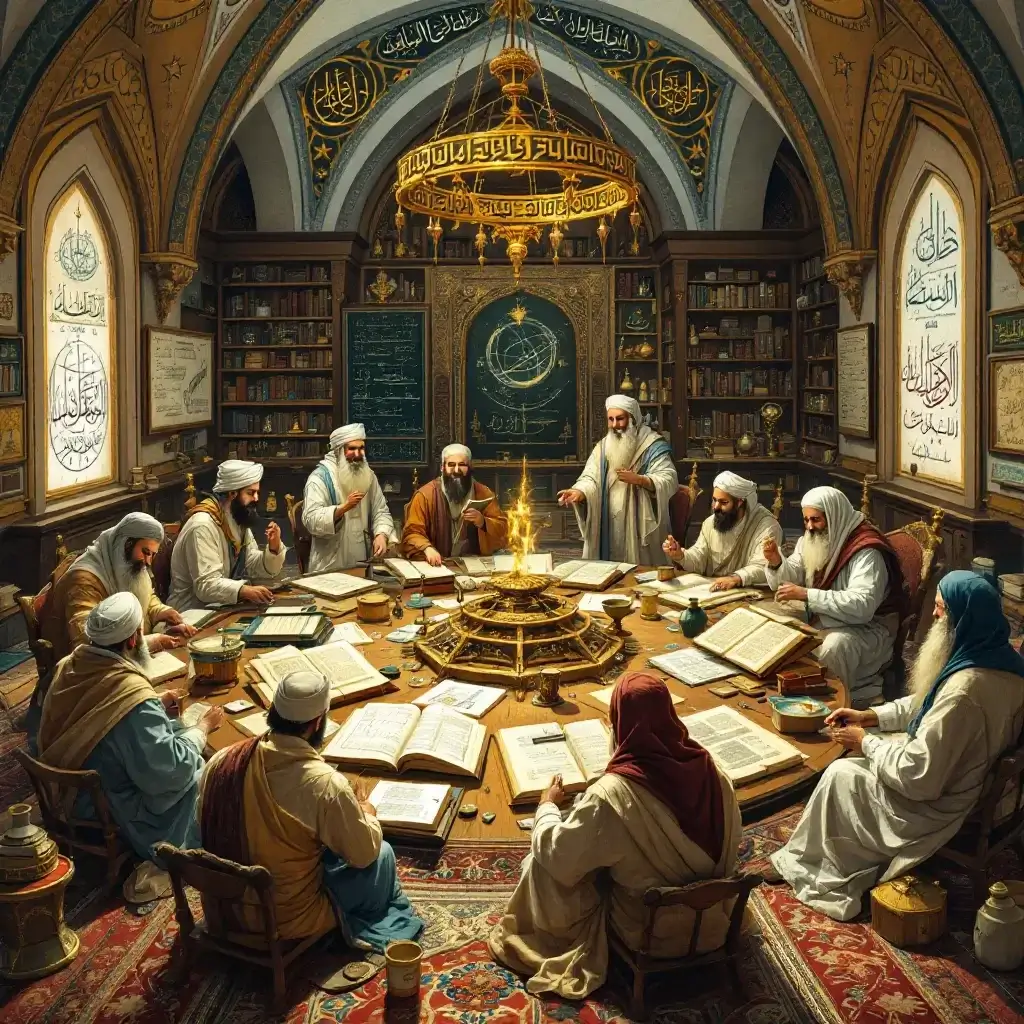
One of the most significant contributions of the Islamic Golden Age was the advancement of knowledge in the fields of medicine, astronomy, mathematics, and chemistry. Notable scholars such as Al-Razi (Rhazes) in medicine, Al-Khwarizmi in mathematics, and Ibn al-Haytham in optics laid the groundwork for modern scientific thought. The works of these scholars were translated into Latin during the Middle Ages, influencing European thinkers such as Copernicus, Galileo, and Kepler.
Scientific Achievements of the Islamic Golden Age
The Islamic Golden Age was marked by significant scientific achievements, particularly in the fields of astronomy and mathematics. Astronomers such as Al-Biruni and Ibn Yunus made accurate measurements of the Earth’s circumference and the solar year, while mathematicians like Al-Khwarizmi developed algebraic methods that are still used today. The discovery of the concept of the zero and the development of the decimal system also occurred during this period, revolutionizing mathematics and facilitating trade and commerce.
In addition to these achievements, the Islamic Golden Age saw the development of several important inventions, including:
- Gunpowder, which was introduced from China and further developed in the Islamic world
- The astrolabe, a navigational instrument used for determining the position of the stars
- The armillary sphere, a model of the celestial sphere used for astronomical calculations
- The water clock, a time-keeping device that measured time using the flow of water
These inventions and discoveries not only reflected the intellectual curiosity and creativity of the Islamic Golden Age but also had a profound impact on the development of science, technology, and culture in the subsequent centuries.
Medicine in the Medieval Islamic World
Medicine was another area where the Islamic Golden Age made significant contributions. Scholars such as Ibn Sina (Avicenna) and Ibn Rushd (Averroes) wrote extensively on medical topics, including anatomy, pharmacology, and disease treatment. The establishment of hospitals and medical schools in cities like Baghdad and Cairo also facilitated the training of medical professionals and the development of new medical techniques.
The Islamic world’s contributions to medicine were not limited to theoretical knowledge; they also developed practical medical techniques, such as surgery and pharmacy. The use of anesthesia, for example, was first recorded in Islamic medical texts, and the development of surgical instruments and procedures was also advanced during this period.
The Role of Trade in the Spread of Islam
Trade played a crucial role in the spread of Islam, particularly in Africa, South Asia, and Southeast Asia. Muslim merchants and traders introduced Islamic culture and religion to these regions, often through peaceful means. The establishment of trade routes and the exchange of goods, ideas, and cultures facilitated the spread of Islam, as well as the transfer of knowledge, technologies, and innovations.
The Silk Road, a network of trade routes that connected Europe and Asia, was an important conduit for the spread of Islam. Muslim traders and travelers along the Silk Road introduced Islam to the regions they visited, and the religion gradually gained popularity among the local populations. The Indian Ocean trade network, which connected the Middle East, India, and Southeast Asia, also played a significant role in the spread of Islam, as Muslim merchants and sailors traveled to and settled in these regions.
Art and Architecture of the Islamic Golden Age
The Islamic Golden Age was also marked by significant achievements in art and architecture. The development of distinctive Islamic art forms, such as calligraphy, geometric patterns, and arabesques, reflected the cultural and spiritual values of the Muslim world. The construction of iconic structures like the Dome of the Rock in Jerusalem, the Alhambra in Spain, and the Great Mosque of Samarra exemplified the advanced engineering and artistic skills of the time.

These architectural achievements not only reflected the aesthetic tastes of the Islamic world but also demonstrated the engineering skills and mathematical knowledge of the time. The use of arches, domes, and minarets, for example, required a sophisticated understanding of mathematics and physics, as well as advanced construction techniques.
The Influence of Islamic Knowledge on the European Renaissance
The Islamic Golden Age had a profound impact on the European Renaissance, as Islamic knowledge and discoveries were transmitted to Europe through various channels, including trade, diplomacy, and migration. The translation of Arabic texts into Latin facilitated the transfer of knowledge, and scholars such as Thomas Aquinas and Roger Bacon drew heavily on Islamic sources in their own works.
The influence of Islamic knowledge can be seen in various fields, including mathematics, astronomy, medicine, and philosophy. The development of algebra, for example, was facilitated by the translation of Al-Khwarizmi’s works into Latin, while the study of astronomy was advanced by the translations of Arabic texts on the subject. The works of Ibn Sina and Ibn Rushd also had a significant impact on the development of medieval philosophy and theology.
Notable Figures of the Islamic Golden Age
The Islamic Golden Age was marked by the presence of several notable figures who made significant contributions to various fields. Some of the most prominent scholars and thinkers of the time include:
- Al-Khwarizmi, a mathematician and astronomer who developed algebraic methods and made significant contributions to the field of astronomy
- Ibn Sina (Avicenna), a philosopher and physician who wrote extensively on medical topics and made significant contributions to the field of philosophy
- Ibn Rushd (Averroes), a philosopher and physician who wrote commentaries on the works of Aristotle and made significant contributions to the field of philosophy
- Al-Biruni, an astronomer and mathematician who made accurate measurements of the Earth’s circumference and the solar year
These scholars, along with many others, played a crucial role in advancing knowledge and understanding in their respective fields, and their works continue to influence scholars and thinkers to this day.
The Decline of the Islamic Golden Age
The decline of the Islamic Golden Age was a gradual process that occurred over several centuries. The Mongol invasion of Baghdad in 1258 CE marked a significant turning point, as it led to the destruction of many libraries, schools, and other centers of learning. The Black Death, which occurred in the 14th century, also had a devastating impact on the Islamic world, leading to significant demographic and economic changes.
Other factors, such as internal conflicts, political fragmentation, and the rise of regional empires, also contributed to the decline of the Islamic Golden Age. The Ottoman Empire, which rose to prominence in the 13th century, eventually became the dominant power in the Islamic world, but it was unable to restore the cultural and intellectual achievements of the Golden Age.
The Legacy of the Islamic Golden Age
The Islamic Golden Age has left a lasting legacy in the modern world. The contributions of Islamic scholars and thinkers to various fields, including mathematics, astronomy, medicine, and philosophy, continue to influence contemporary thought and practice. The cultural and artistic achievements of the Islamic Golden Age, including the development of distinctive art forms and architectural styles, also continue to inspire artists, architects, and designers today.
The legacy of the Islamic Golden Age can also be seen in the many institutions and traditions that it established, including the madrasa (Islamic school) system, the development of Islamic law and theology, and the tradition of Islamic mysticism (Sufism). These institutions and traditions continue to play an important role in the modern Islamic world, shaping the spiritual, intellectual, and cultural practices of Muslims around the globe.
FAQ’s
1. What is the history of Islam?
Islamic history began in the 7th century CE in the Arabian Peninsula with the Prophet Muhammad’s teachings. Over time, it expanded across the world, influencing science, art, governance, and culture.
2. What were the main contributions of Islamic civilization?
Islamic civilization contributed significantly to fields like mathematics (algebra), astronomy, medicine, chemistry, art, and architecture during its Golden Age (8th–13th centuries).
3. How did Islam spread so widely?
Islam spread through military conquests, trade, and missionary activities. Sufi mystics played a key role in spreading Islam in South Asia and Southeast Asia.
4. What is the Golden Age of Islam?
The Golden Age of Islam (750–1258 CE) was a period of cultural, scientific, and intellectual growth under the Abbasid Caliphate. Key achievements were made in medicine, mathematics, astronomy, and art.
5. What led to the decline of the Islamic Golden Age?
The decline was caused by internal divisions, political fragmentation, and external invasions, particularly the Mongol invasion of Baghdad in 1258 CE.
6. What are the most famous empires in Islamic history?
The Ottoman Empire, Safavid Empire, and Mughal Empire were among the most powerful and influential Islamic empires, shaping cultural and political landscapes for centuries.
7. What role did trade play in the spread of Islam?
Trade played a crucial role in spreading Islam, particularly in Africa, South Asia, and Southeast Asia. Muslim merchants and traders introduced Islamic culture and religion to these regions.
8. What is the significance of Islamic art and architecture?
Islamic art and architecture, known for intricate geometric designs, calligraphy, and iconic structures like mosques and palaces, reflect the cultural and spiritual values of the Muslim world.
9. How did Islamic knowledge influence the European Renaissance?
Islamic scholars preserved and translated ancient Greek and Roman texts, contributing knowledge in fields like medicine, astronomy, and philosophy. This knowledge was later transmitted to Europe, influencing the Renaissance.
10. What is the modern impact of Islamic civilization?
Islamic civilization continues to influence the world through its cultural, scientific, and religious legacy, as well as its contributions to modern architecture, governance, and global trade.
Lorem Ipsum