

Fajr: The Success of Becoming Before Dawn
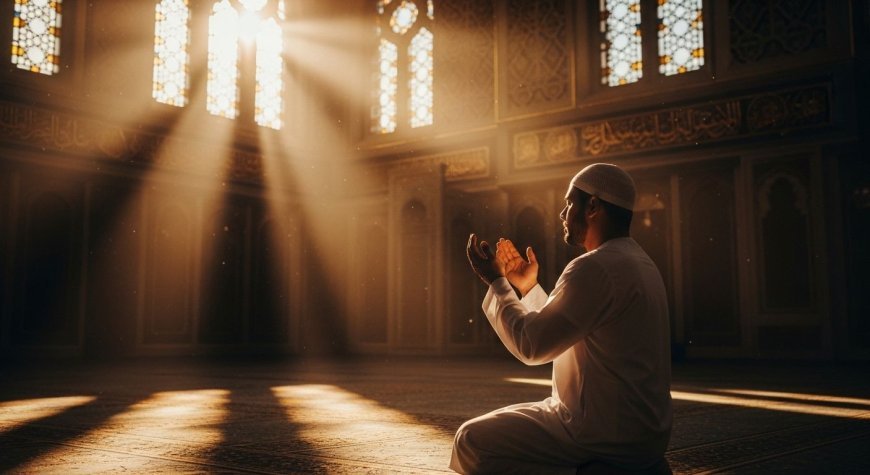
Ever feel like you’re winning the morning race but still losing the day? You’re not alone. We all scramble—coffee, chaos, that first email—thinking that’s just how it’s done. But what if the most powerful success hack isn’t an app or a hack at all? What if it’s a quiet, centuries-old pause that happens before most people even consider getting up?
That’s the morning prayer—Fajr. It’s not just worship. It’s a secret weapon for clarity. Think about it: while the world is still dark and silent, you step away from the noise. You align your heart, your intentions, your gratitude. That simple act? It’s a reset button for your entire day. Before the sun rises, you’ve already done the one thing that makes everything else feel easier. You’ve anchored yourself in purpose. And that changes everything.
Table of Contents
- The ‘Success’ in Morning Prayer Isn’t What You Think It Is
- Clarified: What ‘Morning Prayer’ Actually Means in Islam
- Fajr vs. ‘Morning Prayer’: The Critical Distinction
- The True Arabic Term and Its Implication
- The Practical Blueprint: Making Fajr a Non-Negotiable Habit
- Pre-Sleep Rituals That Set You Up for Success
- The 5-Minute Mindset Shift Before You Stand
- What to Do When You Miss It (and How to Recover)
- What Most People Get Wrong About ‘Prayer for Success’
- The Unseen Chain Reaction: How Fajr Reshapes Your Entire Day
- For the Skeptic: Is This Just Spiritual Bypassing?
- Linking Inner Peace to Outer Productivity
- When ‘Success’ Means Something Deeper Than a Promotion
The ‘Success’ in Morning Prayer Isn’t What You Think It Is
You know, we often hear about morning prayer—Fajr—being this secret weapon for a successful day. More barakah, better decisions, right? But what if I told you that’s kind of missing the point? Actually, the whole ‘success’ thing gets flipped on its head the moment you step into that pre-dawn stillness.
Here’s the part that surprised me: the success isn’t in what you *get* from the prayer. It’s in what you *become* in the process. We’re so focused on the outcome—the promotion, the smooth day—that we bypass the real transformation. I remember reading a scholar years ago who put it like this: Fajr isn’t a transaction. It’s a calibration.
Think about it. You wake up when the world is asleep. You stand before God in pure need, not in a rush to ask for stuff. That act alone rewires you. It tells your soul: “You are not defined by your productivity. You are defined by your connection.” Most khutbahs skip this detail. They’ll talk about the virtues of Fajr, sure. But they rarely say that its greatest success is making you content with being a servant before you’re anything else.
That detail changes everything. Suddenly, the stress of the day ahead doesn’t own you. You’ve already won by showing up. You’ve already secured a victory in the unseen realm. And that… that quiet, internal victory? That’s what actually ends up shaping a truly successful life. It seems obvious at first. It isn’t.
Simple. But powerful.
Clarified: What ‘Morning Prayer’ Actually Means in Islam
You know, when people say “morning prayer for success in Islam,” they’re usually talking about Fajr. But—wait—that’s not the whole picture, is it? It’s easy to just think, *okay, wake up, pray, get successful*. Actually, something interesting happens here. The term gets flattened.
Let me clarify. The “morning prayer” specifically means the *Fajr* salah—the two rak’ahs performed at true dawn, before sunrise. It’s one of the five obligatory prayers. But here’s the part that surprised me: the connection to “success” (falaah) isn’t magical. It’s structural. It’s about starting your day anchored in remembrance (dhikr) and humility.
Most khutbahs skip this detail, but the timing is everything. That pre-dawn quiet? It’s when the world is still. Your mind isn’t cluttered with emails or decisions yet. You stand before Allah in that space. That ritual—the wudu, the physical movements, the recited verses—it trains your brain for focus. A teacher once explained it this way: you’re not asking for success *instead* of effort. You’re calibrating your intention *before* the effort.
Think about it. Waking up for Fajr requires discipline. That discipline spills over. You prove to yourself you can do a hard thing early. Simple. But powerful. It’s not about the prayer *granting* success like a vending machine. It’s about the prayer shaping *you* into someone who approaches their day with purpose.
Here’s what rarely gets mentioned: the quality matters more than the mere act. Rushing through it while half-asleep? That misses the point. The Prophet ﷺ described Fajr as a time of “light.” If you’re just checking a box, you’re blocking that light. The success comes from that internal shift—a few minutes of pure presence.
So, clarified: it’s Fajr. Obligatory. But the “boost” isn’t supernatural. It’s psychological and spiritual conditioning. You start the day grounded. That’s the real mechanism. Everything else—career, relationships, personal goals—gets filtered through that groundedness. That’s the key.
Fajr vs. ‘Morning Prayer’: The Critical Distinction
Ever notice how we say “morning prayer” like it’s just another item on the to-do list? Actually, that phrasing—it flattens something profound. We’re talking about Fajr. There’s a world of difference.
Fajr isn’t just “the prayer you do when you wake up.” It’s that specific, pre-dawn moment. The world is still dark. You’re wrestling with that inner voice whispering “just five more minutes.” That struggle itself? That’s part of the worship. A teacher once explained it this way: the success isn’t in the perfect recitation after a full night’s sleep. It’s in showing up when every fiber says no. That builds a different kind of spiritual muscle.
Most khutbahs skip this detail—the timing. Fajr happens in the *fajr* light, that unique, cool twilight before sunrise. It’s not the bright morning. It’s the quiet, hopeful transition from night to day. You’re standing in that liminal space. Your mind is clearer than at Maghrib, maybe, but your body is still heavy. You’re presenting yourself in a state of raw need. That’s where the connection happens.
And the Quran you recite then? Those shorter, earlier surahs. They hit differently. “Al-Ikhlas” in the deep quiet. It’s not about the length. It’s about the context. You’re affirming God’s oneness in the very moment creation is waking up. It frames your entire day. That’s the critical bit people miss. It’s not a routine. It’s a reset. A daily reminder of where your success—*real* success—actually stems from. Not from your hustle, but from aligning with the source before the world’s noise even starts.
Simple. But powerful.

The True Arabic Term and Its Implication
You know, we often just call it the “morning prayer.” Simple enough. But the actual Arabic term—Fajr—it carries this weight most translations miss. It’s not just “dawn.” It’s the moment of *breakthrough*. The instant the first light tears through the absolute darkness of night.
I remember reading a scholar mention this years ago. He said Fajr isn’t a gentle transition. It’s a violent, beautiful split. One minute, you’re in total obscurity. The next, there’s light. That’s the implication. That’s the spiritual metaphor baked right into the word itself.
So when we talk about “morning prayer for success in Islam,” we’re not just talking about a time slot. We’re talking about aligning yourself with that moment of rupture. The moment where obstacles become visible. Where paths that were hidden suddenly… appear.
Here’s the part that surprised me: the success isn’t *after* the prayer. The prayer *is* the act of participating in that Fajr moment. You’re not waiting for success to come later. You’re embodying the breakthrough itself. You stand in the dark, recite the verses, and claim that light. It’s proactive. It’s a declaration.
Most khutbahs skip this detail. They focus on the benefits, the blessings. Which is fine. But the term itself—Fajr—it’s a command to see differently. To be the light-breaker in your own life. Before the world even wakes up.
That detail rarely gets mentioned. And it changes everything.
The Practical Blueprint: Making Fajr a Non-Negotiable Habit
You miss Fajr once. Maybe you hit snooze, or the night felt too long. It’s just one prayer, right? Actually, that’s where the trick lies. It’s never *just* one.
Think of it like this: your willpower is a bank account. Waking up for Fajr is the first deposit of the day. You do it tired, you do it dark, you just… do it. That tiny victory? It pays interest all day long. Decisions feel clearer. Patience feels deeper. You’re not running on empty by noon.
Here’s the blueprint, and it’s brutally simple. Not easy, but simple.
- Anchor it to something you never skip. For me, it’s the first sip of water after wudu. That glass is always there. The prayer becomes the thing you do *to get to* the thing you want. It hijacks the habit loop.
- Prepare the night before. Lay out your clothes. Set the alarm across the room. This isn’t about motivation; it’s about making the wrong choice harder than the right one. A teacher once explained it as “designing for your future, lazy self.”
- Drop the all-or-nothing. You prayed Fajr on time? Great. You prayed it late because you finally dragged yourself out? That’s still a win. The habit is the showing up, not the perfect timing. Most khutbahs skip this nuance. They make it sound like a performance. It’s not. It’s a lifeline.
That’s the part that surprised me. I thought the benefit was the spiritual credit. Sure, that’s real. But the *practical* boost—the mental reset, the disciplined start—that’s what quietly rewires your entire day. Success in Islam isn’t a separate goal. It’s the natural overflow of a grounded heart. And that grounding starts in the quiet before dawn.
So make it non-negotiable. Not someday. Now. The first step isn’t believing you can do it forever. It’s believing you can do it tomorrow morning. That’s all.

Pre-Sleep Rituals That Set You Up for Success
You know what’s weird? We spend so much time optimizing our mornings—the perfect routine, the right coffee, the motivational podcast. But what if the real secret isn’t in the sunrise at all? What if it’s actually set in motion the night before?
I remember reading a scholar mention this years ago, and it stuck with me. He said the barakah for your Fajr doesn’t start at dawn. It starts when you decide to close your eyes. Most khutbahs skip this detail, but the Prophet’s (peace be upon him) own pre-sleep habits weren’t random. They were a system.
Think about it. That simple adab of washing your hands, making wudu if you can, and lying on your right side—it’s not just etiquette. It’s physical and spiritual preparation. It signals to your whole being: rest is sacred, and tomorrow’s first conversation with Allah is already on the calendar.
Here’s the part that surprised me. It’s not about the length of your prayer later. It’s about the state you arrive in. If you go to bed with a distracted heart, unresolved anger, or just scrolling until you pass out, that mental fog doesn’t vanish at Fajr. The transition is too sharp. But if you use those last minutes for a short, mindful remembrance—even just the three Quls—you’re building a bridge. A quiet mind at night often means a receptive heart at dawn.
And that matters. Because the morning prayer for success in Islam isn’t a magic spell. It’s a reset. A daily contract. You show up present because you built the container for presence the night before. Simple. But powerful.
The 5-Minute Mindset Shift Before You Stand
We’ve all been there. Alarm goes off. World feels heavy. That first thought is rarely, “I am grateful for this new day.” It’s more like, “Ugh. Five more minutes.”
What if the very act of resisting that urge—of standing in the quiet dark before the sun—isn’t just a ritual? What if it’s the ultimate strategic move? I remember a teacher explaining it this way: Fajr isn’t about checking a box. It’s about claiming the day’s narrative before the chaos can write it for you.
That’s the mindset shift. It happens in those five minutes between the alarm and your first step. You’re not just praying salah. You’re calibrating your soul. You’re saying, without words, that this day belongs to a purpose higher than my immediate fatigue.
Here’s the part that surprised me. The success boost isn’t magical. It’s neurological and spiritual, bundled together. The physical act of waking, of wudu, of standing—it signals to your entire being: “Alert. This matters.” Most khutbahs skip this detail. They talk about the reward, the blessings. But the mechanism? It’s the quiet rebellion against autopilot.
Think about it. The world shouts at you from your phone the moment you open your eyes. A news alert. A work email. A social media notification. They’re all demands on your attention. When you choose the prayer mat first, you’re placing a boundary. You’re saying, “My focus has a source before it has a destination.”
That detail rarely gets mentioned. It’s not about the length of your prayer. It’s about the intention—the niyyah—behind the movement. You’re programming your day for patience, for clarity, for intentional action. You’re asking for the strength to handle the difficult conversation, the complex problem, the moments of frustration, from a place of calm.
So the next time that alarm screams, and the warm bed whispers, try this. Sit up. Take three breaths. Just three. Feel your feet on the floor. That’s the start. The physical anchor. The rest follows. It’s a simple pivot. From “I have to” to “I get to.” From reacting to initiating.
That’s the five-minute shift. It’s less about adding another task and more about changing the operating system. You stand in prayer, yes. But more importantly, you stand *prepared*. And that changes everything.
What to Do When You Miss It (and How to Recover)
Missed Fajr. Again.
That sinking feeling hits before the sun’s even up. You know the drill—the intention was there, the alarm maybe even rang. But sleep won. Or anxiety kept you up. Whatever the reason, it’s done. The real question isn’t “why did I fail?” It’s “what now?” Because this moment, right after you realize you missed it, is actually the most important part of the whole practice. Everyone focuses on waking up, but the recovery is where the spiritual muscle gets built.
Here’s the part that surprised me: the immediate replacement prayer isn’t just a box-ticking exercise. It’s a reset button for your heart’s compass. You don’t just roll over and think “oh well.” You get up—as soon as you remember—and you pray it. It’s called qada. A teacher once explained it this way: “Allah doesn’t just want your perfect timing. He wants your awareness. The qada is proof that awareness returned.”
But here’s the nuance most khutbahs skip. The quality matters. You can’t rush it like a debt payment. That short prayer, done with even a fraction of the presence you’d have had on time, carries a weight. It tells your soul: “I see you. I’m still in this.” It’s less about the missed obligation and more about the immediate, humble re-engagement. That shift in mindset—from guilt to conscious repair—changes everything for the day ahead.
So practically: don’t let it linger. The longer you wait, the heavier the missed prayer feels, and the harder the next step becomes. Get up. Make wudu. Pray two rak’ahs for Fajr. That’s it. It’s a tiny ritual with massive psychological and spiritual implications. You’re not starting from zero. You’re starting from a place of having just been forgiven for a delay, because you chose to respond instead of ignoring it.
And that’s the key. The success in Islam isn’t a perfect record. It’s the pattern of return. The morning prayer is your daily reset. Missing it tests that reset mechanism. Passing that test—by immediately doing the qada—strengthens it more than a hundred perfect days ever could. Simple. But powerful.
What Most People Get Wrong About ‘Prayer for Success’
You’ve heard it before—the morning prayer is your secret weapon for a successful day. We’re told to just do it, and blessings will follow. But here’s what quietly bugs me: most advice treats it like a transaction. Say these words, get that result. It’s almost… mechanical.
That’s not the core issue. The real misunderstanding runs deeper. A teacher once explained it this way: we focus on the *asking* part—the dua for guidance, for sustenance. And that’s important, sure. But we miss the foundational shift that happens *before* we even ask.
Think about it. Fajr. The world is still quiet. You’re standing there, half-awake, maybe. The act itself—the wudu, the physical movements, the prescribed words—isn’t just a pre-prayer ritual. It’s the reset. It’s the moment you consciously step out of your own narrative. Your to-do list, your worries, your ambitions… they get set aside. You’re not bringing your plans *to* God. You’re placing yourself *under* a higher order first.
That detail rarely gets mentioned in the quick khutbahs about success. We’re so eager for the outcome—the barakah in our work, the openings in our life—that we sprint past the posture. The profound success isn’t in the answered request later. It’s in that quiet moment of alignment itself. You’re acknowledging a source beyond your own effort.
So the simple fix? Stop praying *for* success. Start praying *from* a place of already having oriented yourself toward the One who defines what success even is. It changes everything. That’s the part that surprised me years ago. The prayer isn’t the request. It’s the re-centering. The requests flow from that space, not the other way around.
Try it tomorrow. Before you ask for anything, just feel that shift. The standing, the recitation, the silence between movements. That’s where the real groundwork is laid. The rest is just… consequence.
The Unseen Chain Reaction: How Fajr Reshapes Your Entire Day
You know, most people treat Fajr like a box to check. Prayer done, day begins. But that’s missing the whole point. It’s not an opener; it’s the lever.
Actually, something interesting happens here. When you pull yourself out of bed in that deep, quiet dark—before the world’s noise starts—you’re not just performing a ritual. You’re making a declaration. A silent, physical vote for a different kind of day.
Here’s the part that surprised me: it’s rarely about the prayer itself changing your luck. It’s about what the prayer *does to you*. That discipline, that small act of obedience when every fiber says sleep… it rewires something. A teacher once explained it as “setting your internal compass before the sun even rises.”
And that matters. Because from that first intentional act, everything else follows. Your intention for the day is already pure. Your time feels… different. More sacred, somehow. You find yourself thinking twice before wasting an hour. Barakah isn’t magic; it’s a natural outcome of starting with God.
Most khutbahs skip this detail. They talk about the reward, the virtues. Which is true. But the practical chain reaction? The way that single, quiet moment of submission cascades into better decisions, clearer focus, a calmer response tostress? That’s the real unseen benefit. It’s subtle. It’s cumulative.
Simple. But powerful. Your whole day is built on that first foundation.
For the Skeptic: Is This Just Spiritual Bypassing?
Let’s be real for a second. When you first hear “morning prayer for success,” it can sound… cheap. Like a spiritual life hack. I get the skepticism. It feels too simple. Just pray and things get better? That’s not how the world works, right?
But here’s the part that surprised me. It’s not about magically wishing for a promotion. It’s about what the prayer *does* to you before the world even has a chance to hit you.
Think about the physicality of it. You wake up. You wash your face. You stand there, in the quiet, and you’re forced to be present. No phone. No news. Just you and the words. That’s a radical act of grounding. Most people roll out of bed straight into their anxiety—what’s due today, what happened yesterday. Fajr pauses that storm. It’s a built-in moment of clarity.
A teacher once explained it this way: you’re not asking God to change your circumstances. You’re asking to change *yourself* so you can meet those circumstances differently. The prayer itself is a training ground for patience, for humility, for focus. You carry that mental state into your work. You’re less reactive. More intentional. That’s not bypassing. That’s building resilience from the inside out.
So no, it’s not a secret cheat code. It’s a daily recalibration. And honestly, that small, consistent act of showing up for yourself before dawn—that’s where the real success starts. It’s subtle. But it changes everything.
Linking Inner Peace to Outer Productivity
Ever notice how the hours after Fajr just feel… different? Like the world hasn’t fully woken up yet, but you already have? There’s a clarity there. A teacher once explained it this way: the morning prayer isn’t just a ritual to check off. It’s a deliberate anchoring of your soul before the day’s chaos even begins. That’s the part that surprised me—it’s less about asking for success and more about *receiving* a state of being from which success naturally flows.
Think about it. You stand in prayer, focused on the same verses every single day. It trains your mind to return, again and again, to a single point. That mental muscle? It’s the same one you use when a difficult email lands in your inbox and you don’t immediately react. You pause. You breathe. You choose a response. That inner peace from the prayer isn’t a passive calm. It’s an active shield. It creates a buffer between you and the world’s noise.
Most khutbahs skip this detail, but the real productivity hack is that this spiritual reset makes you less reactive. You’re not running on the fumes of anxiety or yesterday’s frustration. You’re starting from a place of intentional calm. So your decisions at work, your patience with family—they all stem from that grounded moment in the pre-dawn quiet. It’s subtle. But it’s everything.
That’s the key.
When ‘Success’ Means Something Deeper Than a Promotion
You know, we throw around the word “success” a lot. Promotion. Bigger salary. More stuff. But in Islam? It starts way earlier. Like, before the sun even thinks about rising.
Think about it. The true meaning of falaah—that Arabic word often translated as “success”—isn’t a LinkedIn update. It’s a deep, enduring well-being. In every dimension. Your heart is at peace. Your relationships are sound. You’re actually content, not just chasing the next high. I remember reading a scholar mention this years ago, how the morning prayer frames your entire existence around something… permanent. Not the temporary wins of a quarterly report.
Most khutbahs skip this detail, but the very timing of Fajr is the first lesson. You wake up when it’s still dark, when the world is quiet. You stand before God before your phone even buzzes. That physical act? It’s a reset. A declaration that your worth isn’t tied to your inbox. That’s the part that surprised me. It’s not just a ritual to check off. It’s a psychological anchor.
So when we talk about a “morning prayer for success,” we’re not asking for a better job title. We’re asking for the clarity to see what real success even is. And that changes everything. The prayer becomes less about “give me” and more about “align me.”
Insights & Final Thoughts
You know, it’s funny how we often chase success—the next promotion, the bigger goal—without ever pausing to set our inner compass first. That’s really what a morning prayer for success in Islam offers: a moment of grounding before the world pulls you in a hundred directions. It’s not about asking for a magic fix; it’s about aligning your intentions, reminding yourself that your effort and your faith walk together.
So maybe the simplest takeaway is this: tomorrow, before you check your phone or your to-do list, just stand for a minute. Ask for clarity, for barakah in your work, for the strength to do what’s right. Let that quiet moment shape how you move through the day. Because when your foundation is steady, everything else feels a little less shaky.
Why not try it? Just one sincere prayer at dawn. See how it changes not just your tasks, but your own heart toward them.
Frequently Asked Questions
Is waking up for Fajr really necessary for success, or is it just a nice-to-have?
In Islamic teaching, Fajr is one of the five obligatory prayers, so its necessity is theological, not optional. The ‘success’ (falaah) mentioned in the Quran refers to ultimate success in the Hereafter. The worldly boost—like clarity and discipline—is a profound secondary benefit, not the primary purpose.
How do people usually mess this up when they start?
The biggest mistake is focusing only on the act of waking up, not the quality of the prayer. They rush through it while half-asleep, treating it as a box to check. The transformative power lies in presence (khushu’)—standing consciously, understanding what you’re reciting, and making sincere supplication afterward. Start with quality over quantity.
I’m not a morning person and have a chaotic schedule. Can this still work?
Yes, but you must reframe it. The goal isn’t to become a 5 AM guru; it’s to prioritize the prayer within its valid time window. If you naturally wake at 7 AM, pray Fajr immediately upon waking, even if it’s later. The discipline is in making it the first conscious act of your day, regardless of the hour. Adjust your evening routine to make this possible.
How long does it usually take to feel a real difference in my focus?
Consistency is key. Many report a perceptible shift in mental calm and intentionality within 2-3 weeks of consistent, mindful prayer. The neurological and spiritual ‘reset’ builds cumulatively. Don’t judge day-to-day; observe the trend over a month.
Lorem Ipsum